Your Supercomputer Mind
During my physics PhD, I spend a lot of time working with supercomputers. Before I had direct experience with writing and running code on supercomputers, the image that came to mind for “supercomputer” was something like this:
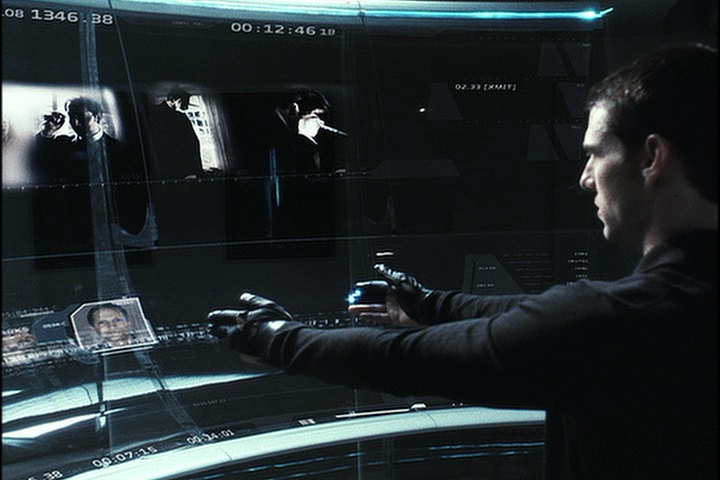
The reality is far more mundane:

I’ve never actually seen the supercomputer I used to do my PhD work. It was in Toronto, I was in Montreal, at home in my pajamas.
This was in part disappointing (“What, I don’t get a cool security clearance card?”). But in another way, it was kind of awesome. I’d be sitting in my PJ’s at home sending instructions to a multi-storey supercomputer, and telling it what to do.
Besides making my PhD work possible, I received something else from my work there. Something quite unexpected, that I’ve found very useful to me in my daily life.
I found a new model for thinking about my own mind, that allows me to solve problems without thinking about them.
And it’s one you can practice as well…

How To Work With Supercomputers
First, a quick review. How is it that a bunch of grad students get to play with such computational power from their tiny cubicles or messy bedroom/offices?
At it’s heart, a supercomputer nowadays (also often called “a cluster”), is nothing more than a massive network of processors and hard-drives and cables, together with a job queue that allows people to post instructions to some portion of these resources.
So all one needs in order to use these compute clusters is a connection to log in to it, and an authorized account. Which disappointingly has nothing to do with retina scans or fingerprints… just a username and password.
Whether you’re simulating galaxies, atoms, or gene expression networks, the job of a computational scientist consists of:
- Write simulation code in some ancient language like C or FORTRAN (yes, still).
- Write a script that tells the compute cluster how many processors you’re likely to need, and for how long.
- Send these instructions to the job queue.
- Wait for the job to run (either for several hours, days, or sometimes weeks).
- Get an email when the results are in.
- Tear your hair out when you realize your instructions were flawed, and the results you get are garbage.
- After wallowing in self-pity, start over.
- Repeat until your results are “good enough”. (the data rarely improves much, so what actually happens is that your standards drop)
How The Mind Works On Big Problems
“One might almost believe that half of our thinking takes place unconsciously…I have familiarized myself with the factual data of a theoretical and practical problem; I do not think about it again, yet often a few days later the answer to the problem will come into my mind entirely from its own accord.” - Schopenhauer (1826)
Let’s see how the mind works on problems that can’t be solved in one sitting.
- Define clearly what problem is.
- Define how important it is to you.
- Send these instructions to your subconscious*.
- Once there is clear mental space, your subconscious will start working on the problem.
- You’ll get “pinged” with insight once your subconscious has found a solution.
- If your initial instructions were vague or incorrect, you’ll get poor results, if any.
Clearly,
When you’re using your mind well, it works like a supercomputer.
This parallel will make several things very clear, such as why ideas come to you in the shower, why the supposed “law of attraction” works, and why so many inventors and innovators spent a lot of time hovering between sleep and wakefulness.
And it’ll help you become a better problem solver, without taking any additional time.
* To be clear, the subconscious I’m talking about isn’t the subconscious of Freud or Jung. I’m referring to the unconscious pattern-matching systems in the brain, or what Daniel Gilbert calls the “nexting engine”. These ideas are grounded in neuroscience, not mysticism.
The Two Modes
I won’t go further into all the parallels, but they are extensive:
| Compute Cluster | Human Brain | |
|---|---|---|
| Interactive Mode | Background Mode | |
| Feedback Cycle | Real-time | Slow (weeks/months) |
| Feedback Format | Rich (Text/Images) | “Pass/Fail” message |
| Resources (Space) | Limited RAM | ~Unlimited memory |
| Resources (Time/Power) | Limited Compute Time | Can run indefinitely |
| Location | Interactive Node | Spread across the Cluster |
| Ideal For | Simulating test scenarios. Defining what to simulate. Verifying results. | Simulating complex scenarios. |
A reasonable question at this point is “So what?”
Well, if you’re using these modes incorrectly, it doesn’t matter how much time you devote to solving any important problem, you’ll just be going in circles. We need to be intentional about the mode we’re in.
For example, I’ve been taking 90 minutes every Sunday to lie and just think. Sometimes these sessions were a waste of time, and at others they were immensely productive. Insights from productive sessions can routinely side-step months of work.
I now realize my most productive thinking sessions were the ones where I was firmly in one mode or the other.
You need to decide which mode you’re in, and prepare accordingly.
Interactive “Sending” Mode
With the conscious mode, the key is to be aware of its limitations, and prepare accordingly.
1. Manage Ego Resources
“Civilization advances by extending the number of important operations which we can perform without thinking about them. Operations of thought are like cavalry charges in a battle — they are strictly limited in number, they require fresh horses, and must only be made at decisive moments.” - A.N. Whitehead, An Introduction to Mathematics (1911)
“Ego depletion” is the term psychologists use for anything that drains your conscious resources. This can be things like low blood sugar, making decisions, exercising willpower, etc.
It’s been shown by numerous studies that all conscious processes deplete the same resource. Which means that deciding on what to eat for breakfast, then what to wear, and then exercising willpower to get yourself to do some pushups, all drain your attention.
Conserve your resources when going into “send” mode, by:
- Sleep well.
- Eating well to maintain consistent blood-sugar levels.
- Eliminate even the potential for distractions.
- Schedule your “send” think blocks first thing in the morning.
- Streamline your morning routine so you make no decisions, and exercise no willpower, before your think block.
2. Expanding your Conscious
Another limitation of the conscious mind is its limited RAM. You simply cannot hold very many variables/symbols/ideas in your consciousness at once. To remedy this, take full advantage of “distributed cognition”.
Use any medium at your disposal to increase your RAM:
- Sketch on a whiteboards
- Work through your thoughts on paper
- Open up a Gingko tree and start jotting your thoughts down
At this stage, you might even do some quick searches online, as long as you don’t get distracted. Essentially, anything that helps you make your thoughts tangible will help reduce the number of things you need to juggle in your mind.
3. Define the Problem
Unless you’re sure that you can solve the problem you’re working on in one sitting, you need to focus your efforts during this “sending” on clarifying the problem. Focus all your conscious attention on asking better questions, defining what the problem really is.
Some tools you might use:
- Ask “Why?” five times or more.
- Imagine you’re writing a brief for a consultant or expert to solve this problem.
- Define very clearly what success will look like (and forget about How).
Passive “Receiving” Mode
You’ve done the hard work by “sending” your instructions to the unconscious. You need to sit with the problem for a bit, and then make a quiet space a few days later to receive the response.
Here’s how to prepare your mind to receive insight.
1. Quiet the Conscious
We’re so used to the constant ego-chatter that we need to make an effort when we want mental quiet.
Meditation is an obvious solution, but there are other, more prosaic ones, that seem to work.
- Taking a shower.
- Going for a walk in the park.
- Washing dishes while listening to Classical music.
- Doing any number of household chores.
- etc…
You don’t need to go to great lengths to avoid distraction. In fact, some low-level distraction is required.
A more esoteric approach can also be used to great effect: “hypnagogia”, which is the transition state between wakefulness and sleep. Beethoven, Dali, Tesla and Newton all credited this state for some of their insights.
2. Signal your Receptivity
John Cleese calls this “letting your mind gently rest against the problem”, and I think it’s a perfect description. You’re simply opening up a receiving channel, not forcing a solution.
This step can be thought of as leaving on a gentle “beacon” for your unconscious to home in on.
(Functional MRI can actually locate this beacon, in the medial prefrontal cortex. The rest of the prefrontal cortex shuts down in creative tasks, especially the inhibitory and self-control centers in the dorsolateral prefrontal cortex.)
3. Wait for Insight
Waiting for insight is without a doubt the hardest part of the process. Especially for analytical people like me.
You can’t force the answer, but there are simple things you can do to build trust in the process. I’ve started “practicing intuition” by finding problems that require intuitive solutions, and deliberately not thinking about them.
Here are some things you might try:
- Have something “on the tip of your tongue”? Note how the less you think the quicker the answer comes.
- Next time you’re doing the crosswords, say, just “let your mind gently rest” against the clue, and see what comes to you.
- Play a game of chess or Go, without thinking too much.
- Keep an “insight” log to track all the times an idea came “out of nowhere”. Simply recognizing the power of your unconscious mind can help you trust it further.
Putting it All Together
Thinking of the mind as two distinct “Send” and “Receive” modes, both with their own strengths and weaknesses, can help you drastically improve your ability to solve very difficult problems.
And all it takes is 90 minutes or so a week to “send”, and some dedicated quiet mental time to receive the response.
There’s much more I’d love to say about this, but I’ve gone over 1600 words already. I’d love to hear your thoughts, questions, or refutations in the comments.